Primary 1 Orientation Singapore: What to Expect and How to Prepare
Primary 1 orientation Singapore guide for parents of K1-K2 kids: what happens on the day, timeline, and simple ways to prepare your child for P1.
QuizKin Team
Published 11 September 2026
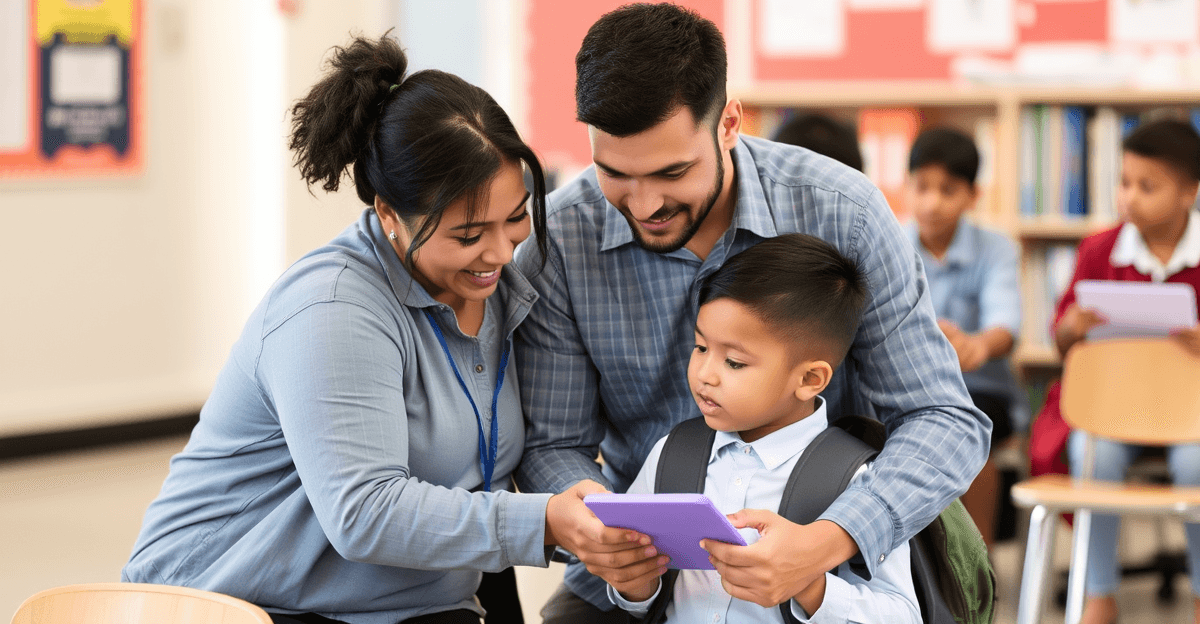
It's a familiar mix of emotions for every Singapore parent: you've just received the letter confirming your child's Primary 1 posting, and suddenly the "big school" you've been talking about for months feels very real. If you're wondering what happens at Primary 1 orientation in Singapore — and how to help your little one walk through those gates feeling confident rather than nervous — you're in exactly the right place. This guide walks you through what to expect on the day, a realistic preparation timeline, and small, practical steps that make the transition from K2 to P1 far smoother for your child.
Key Takeaway Box
- Primary 1 orientation in Singapore is usually held in November or December, after P1 posting results are released.
- Orientation typically lasts 1–3 hours and covers uniforms, textbooks, the daily timetable, canteen, and transport arrangements.
- The biggest predictor of a smooth P1 start is independence and routine, not academic drilling.
- Start preparing your child 2–3 months before school begins, in short, playful sessions.
- Formal school in Singapore begins the year a child turns 7, so most P1 pupils are 6 turning 7.
What Is Primary 1 Orientation and Why Does It Matter?
Primary 1 orientation is a welcome session run by your child's posted primary school, held before the school year begins in January. Its purpose is to familiarise both you and your child with the campus, teachers, routines, and administrative requirements so the first day of school feels familiar rather than overwhelming. Orientation is the single most useful in-person opportunity you'll get to prepare practically for P1 — attending it removes most of the guesswork from January's first week.
For your child, it's a chance to see the classroom, walk the corridors, and meet a form teacher in a low-pressure setting. For you, it's where the abstract idea of "primary school" turns into concrete to-do lists: which uniform supplier to visit, which textbooks to buy, how the school bus works, and what time the day starts and ends. Schools know the leap from a cosy preschool like PCF Sparkletots, My First Skool, or a PAP Community Foundation kindergarten to a much larger primary campus can feel daunting — orientation is designed to soften that jump.
When Is Primary 1 Orientation Held in Singapore?
Most Singapore primary schools hold P1 orientation in November or December, once the Ministry of Education (MOE) P1 registration exercise has concluded and posting results are confirmed. The exact date varies by school, so your official notification will arrive by post or appear on the school's website and Parents Gateway app.
Here's a realistic timeline for a child entering Primary 1:
- June–August (P1 Registration Exercise): MOE runs the annual P1 registration across several phases (Phase 1 through Phase 3), with results released progressively.
- September–October: Posting results are finalised; you receive confirmation of your child's school.
- November–December: The school issues orientation details and holds the session.
- Early January: The new school year begins for all levels in Singapore.
Because dates differ between schools, mark your calendar the moment the notification arrives and arrange for at least one parent to attend. If you're still navigating the earlier registration steps, our Primary 1 Readiness: 30 Skills Your Child Needs checklist is a helpful companion for the months leading up to orientation.
What to Expect at Primary 1 Orientation
A typical Primary 1 orientation in Singapore lasts one to three hours and combines a parent briefing with a child-friendly campus tour. While every school structures its programme differently, most cover a consistent set of essentials. Here's what you can realistically expect.
The Parent Briefing
The principal and key personnel usually open with a welcome address, then move into practical matters. Expect information on:
- School hours and timetable — start and dismissal times, recess slots, and the weekly subject structure (English, Mother Tongue, Mathematics, and other subjects aligned to the MOE curriculum).
- Uniforms and PE attire — approved suppliers, sizing, and where to buy.
- Textbooks and workbooks — the booklist and where to purchase, plus guidance on labelling everything.
- Financial Assistance Scheme (FAS) and MOE Edusave information for eligible families.
- Transport — school bus operators, pick-up arrangements, or drop-off logistics.
- Communication channels — how the school uses Parents Gateway for announcements and consent forms.
- Before- and after-school care — Student Care Centre options for working parents.
The Child's Experience
Many schools run a parallel programme for children while parents are briefed. Your little one might tour classrooms, visit the canteen and toilets, meet a form teacher, and take part in a short ice-breaker activity. This is genuinely valuable: seeing the physical space in advance is one of the most effective ways to reduce first-day nerves.
What to Bring
Come prepared with a notebook or your phone for notes, any documents the school requested, and a water bottle for your child. Wear comfortable shoes — there's often a fair amount of walking.
How to Prepare Your Child for Primary 1: A Practical Guide
The most important preparation for Primary 1 in Singapore is building independence and routine, not academic drilling. MOE and educators consistently emphasise that children thrive in P1 when they can manage themselves — buying food, keeping track of belongings, and following instructions — far more than when they can complete advanced worksheets. Start about two to three months before school begins, keeping sessions short and playful.
1. Build Self-Reliance Skills
These everyday abilities matter enormously in a busy primary school where one teacher supervises 30 or more pupils:
- Buying food independently — practise handling coins and small notes, ordering, and carrying a tray. A trip to a hawker centre is perfect rehearsal.
- Opening containers and packaging — lunch boxes, drink bottles, snack wrappers.
- Toilet independence — using a public-style toilet, flushing, and washing hands without help.
- Managing belongings — packing and unpacking a bag, and recognising labelled items.
Many of these rely on hand strength and coordination. Simple activities like threading, cutting, and playdough help — you'll find plenty in our guide to fine motor skills activities for K1 kids in Singapore.
2. Establish a School-Day Routine Early
Two weeks before term starts, shift bedtime and wake-up times to match the school schedule. Practise the full morning sequence — waking, dressing, breakfast, packing the bag — so it feels automatic. A predictable routine reduces morning stress for the whole family and helps your child feel in control.
3. Reinforce Foundational Literacy and Numeracy — Gently
Your child does not need to read fluently or do multiplication before P1. The MOE curriculum is designed to teach from foundational levels. What helps is comfortable familiarity with letters, sounds, numbers to 20, and simple counting. Keep it light and enjoyable rather than pressured.
This is where short, game-based practice fits naturally into daily life. QuizKin offers adaptive quiz practice that makes learning fun and measurable for K1-K2 kids — it adjusts to your child's level so they stay in that sweet spot of "just challenging enough," building confidence without the drill-and-worksheet fatigue. For a look at why this approach works so well at this age, see our article on why game-based learning works for preschoolers. If you'd like to understand what to reasonably expect, our overview of reading milestones for children ages 4-6 and the K2 maths assessment guide set realistic benchmarks.
4. Nurture Social and Emotional Readiness
P1 means new friends, a bigger environment, and more independence. Help your child practise sharing, taking turns, asking for help, and recovering from small setbacks. Talking positively about "big school" — and acknowledging that feeling a little nervous is completely normal — goes a long way. For more, our guide on developing social skills in preschoolers offers age-appropriate strategies.
How to Manage First-Day Nerves (for Your Child and You)
Some anxiety before Primary 1 is normal and healthy — the goal is to acknowledge it, not eliminate it. Children take emotional cues from their parents, so projecting calm confidence matters as much as any checklist.
A few evidence-informed approaches:
- Visit the school beforehand — even a walk around the perimeter or through the gate (where permitted) builds familiarity.
- Read stories about starting school to normalise the experience through a character your child relates to.
- Rehearse goodbyes with a warm, brief send-off routine rather than a drawn-out one.
- Keep your own worries in check in front of your child, saving detailed questions for the teacher.
If your child tends to feel overwhelmed by new or evaluative situations, our guide to reducing test anxiety in preschoolers has calming techniques that apply just as well to the first weeks of P1.
Does Primary 1 Preparation Affect PSLE Down the Line?
A strong, confident start to Primary 1 lays the foundation for the entire primary journey, including the PSLE — but the connection is about habits and attitudes, not early academic pressure. Children who begin P1 feeling capable and curious tend to develop positive learning habits that compound over six years. The PSLE is taken in Primary 6, and no amount of pre-P1 cramming replaces steady, healthy learning routines built from the start.
The best gift you can give your child is a love of learning and the self-belief that they can tackle new challenges. That mindset — far more than a head start on spelling — is what carries children through primary school.
A Note on Screen Time and Digital Learning Tools
If you plan to use apps to support your child's readiness, balance is key. Health guidelines in Singapore recommend limiting recreational screen time for young children, so any educational app should be used in short, purposeful sessions with a parent nearby. Our practical guide to screen time rules for preschoolers helps you set healthy limits, and our roundup of the best educational apps for 4-year-olds in Singapore can help you choose quality tools.
If you feel your child would benefit from extra one-to-one support before or during P1, you can find a tutor for free — with no agency fees — through TuitionLah. And for parents keeping an eye on the budget as school-related costs add up, WhyNotDeals rounds up the latest education and family deals in Singapore.
Your Primary 1 Orientation Checklist
Before orientation day, make sure you:
- ✅ Confirm the date, time, and venue from your official notification and Parents Gateway.
- ✅ Arrange for at least one parent to attend.
- ✅ Bring a notebook, requested documents, and a water bottle.
- ✅ Note down the uniform supplier, booklist, and transport details on the day.
- ✅ Ask about Student Care and financial assistance if relevant.
After orientation, in the run-up to January:
- ✅ Buy and label uniforms, books, and stationery.
- ✅ Practise canteen, toilet, and self-care routines.
- ✅ Shift to a school-day sleep schedule.
- ✅ Keep learning short, playful, and confidence-building.
Final Thoughts
Primary 1 is a big milestone — for your little one and for you. But with a clear understanding of what orientation involves and a gentle, well-paced preparation plan, the transition from K2 to P1 can be genuinely exciting rather than stressful. Focus on independence, routine, and a positive attitude toward learning, and let the academics unfold naturally. Your child is more ready than you might think — and so are you.
Sources
- MOE Primary One (P1) Registration — Official Ministry of Education information on the P1 registration exercise, phases, and timeline.
- MOE Preparing Your Child for Primary School — MOE guidance on the primary school curriculum and what to expect in P1.
- MOE Financial Assistance Scheme (FAS) — Details on financial support available to eligible Singapore families.
- HealthHub (Ministry of Health) — Screen Time and Child Development — Singapore health guidance on healthy screen habits for young children.
- Parents Gateway (MOE) — Official school-parent communication platform used for announcements and consent.
Practise what you’ve read with QuizKin
Adaptive quizzes covering phonics, sight words, numbers, and more — aligned with the Singapore MOE curriculum. Start your free Premium trial today.
Frequently Asked Questions
Most Singapore primary schools hold P1 orientation in November or December, after the P1 registration exercise closes and posting results are released. Schools notify parents by post or through their website with the exact date, time, and venue. Orientation usually lasts one to three hours and is held on a weekday or Saturday morning.
Yes, at least one parent or guardian should attend, as orientation covers important administrative matters like uniforms, textbooks, bus arrangements, and the school day timetable. Many schools run a parallel session where children tour classrooms while parents attend a briefing. Bring a notebook, as there is a lot of practical information to absorb.
Focus on independence and routine rather than academics: practise buying food at the canteen, opening lunch boxes, managing toilet visits, and following a school-morning routine. Reinforce basic literacy and numeracy through short, playful sessions rather than long worksheets. Talk positively about 'big school' so your child feels excited rather than anxious.
Ready to make learning fun?
QuizKin turns screen time into learning time with adaptive quizzes built for K1-K2 kids in Singapore. Free to start.
Related Articles
Before Primary 1: What Learning Tools Actually Work in the K2 Bridge Year (2026)
KooBits, Practicle and Geniebook all start at P1 — so what should your K2 child use in the year before Primary 1? An honest guide to the K2-to-P1 bridge year for Singapore parents.
SPARK Certified Preschools: Does It Matter? (2026)
What SPARK certification really tells you about a Singapore preschool — how centres are assessed, what it misses, and how to use it when shortlisting.
Sparkletots vs My First Skool 2026: Fees & Verdict
Sparkletots or My First Skool? 2026 fees compared (both ~S$770-800/mo before subsidies), plus curriculum, locations, quality — and which suits your child.