How Siblings Can Learn Together at Home: Activities for K1-K2 Kids in Singapore
Discover fun sibling learning activities for K1-K2 kids in Singapore. Build skills together with games, crafts, and activities aligned with MOE curriculum.
Mervin Tan · Founder, QuizKin
Published 24 May 2026
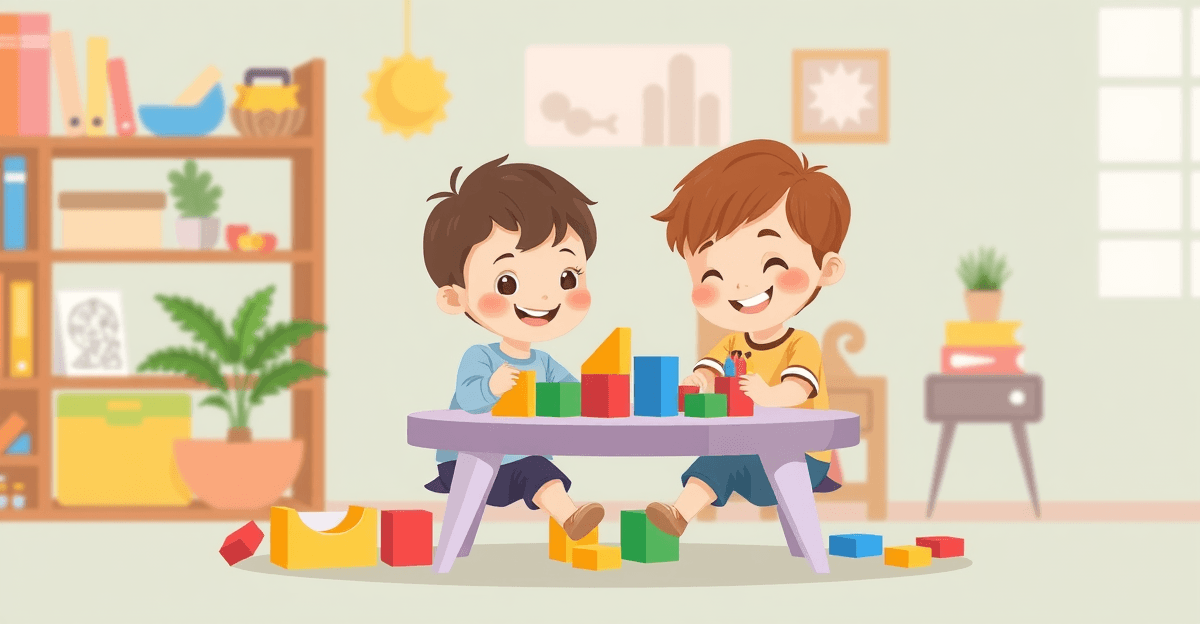
You're standing in your kitchen at 4 PM. Your K1 daughter is asking for help with letter recognition, and your K2 son wants to practise counting. You can't clone yourself, so you're thinking: Can they just learn together somehow?
TL;DR: Discover fun sibling learning activities for K1-K2 kids in Singapore. Build skills together with games, crafts, and activities aligned with MOE curriculum.
The good news? Yes, they can—and it might be one of the best learning investments you make for both children.
In Singapore, where many families juggle work, tuition schedules, and enrichment classes, sibling learning is a practical, joyful way to build academic skills and strengthen family bonds. Whether you're at a PCF preschool, My First Skool, or managing home learning between school drop-offs, this guide will show you how to create learning moments that work for both kids.
Why Sibling Learning Works (Especially in Singapore)
Before diving into what to do, let's understand why this matters.
Peer learning is proven. When older siblings guide younger ones, both children benefit. The older child consolidates their own knowledge (teaching is one of the best ways to learn), while the younger one gets one-on-one attention in a low-pressure environment. There's no teacher anxiety, just family.
It's practical for Singapore families. With work demands, tuition schedules, and enrichment classes packed into evenings, having siblings learn together means you're maximizing home time. Instead of managing two separate learning sessions, you're building one intentional space where both children grow.
It mirrors MOE values. Singapore's Ministry of Education emphasizes collaborative learning and peer support from the preschool level. By encouraging sibling learning, you're reinforcing the same principles your children experience at school.
It builds life skills beyond academics. Patience, communication, problem-solving—these emerge naturally when siblings work together. These are the skills that matter as much as letter recognition when your K1 child enters Primary 1.
Understanding Your K1-K2 Children's Learning Needs
Before you design activities, it helps to know what each level typically focuses on.
K1 (Age 4-5): Focus on foundational skills—phonemic awareness (hearing sounds in words), number sense (1-10), fine motor skills (holding a pencil), and social-emotional learning. K1 children are curious, tactile learners who need frequent movement breaks.
K2 (Age 5-6): Moving toward early literacy and numeracy—blending sounds, writing simple words, counting to 20, basic addition/subtraction concepts, and independence in learning. K2 children are ready for slightly longer tasks and can follow multi-step instructions.
The sweet spot for joint activities? Focus on overlapping skills. Both levels work with phonics, number recognition, counting, and creative expression. This is where sibling learning shines.
5 Practical Sibling Learning Activities for Home
1. Phonics Hunt Around the House
Why it works: Both K1 and K2 are learning letter sounds. This activity is tactile, moves beyond the table, and creates excitement.
How to do it:
- Choose 3-4 letter sounds you want to focus on (e.g., /s/, /m/, /t/, /b/).
- Hide small objects or pictures around your home that begin with these sounds.
- Your K2 child leads the hunt, naming the item and the sound; your K1 child repeats the sound.
- Swap roles so K1 feels like the "teacher" too.
- Write down the words found, and have K2 try to write the starting letter while K1 traces it.
Singapore context: This works brilliantly in HDB flats, condos, or houses. Use household items—sipak (slippers), milo, tap, book—so children connect learning to their real environment.
Time: 15-20 minutes
2. Number Games with Household Items
Why it works: Concrete, visual learning that doesn't feel like "schoolwork." Both ages engage differently.
How to do it:
- Use items like buttons, coins, pasta pieces, or LEGO bricks.
- Set up different "stations": one for K1 to count to 10, another for K2 to count to 20 and group by fives.
- Play a simple game: roll a die, count that many items, move them to a basket. First to reach 20 (K2) or 10 (K1) wins.
- Introduce quick addition: "You have 3, I have 2. How many together?" (K2 can attempt answers; K1 counts on fingers).
Singapore twist: Use $0.10 or $0.20 coins to introduce money sense early. Many Singapore parents value numeracy for PSLE readiness, and early comfort with numbers compounds over years.
Time: 20 minutes
3. Collaborative Storytelling & Illustration
Why it works: Combines language, creativity, and imagination. No "right answer," so both kids feel capable.
How to do it:
- Start a story: "Once, there was a cat in Bukit Timah forest..."
- Take turns adding one sentence each (K2 writes/tells longer sentences; K1 contributes simple ideas).
- As you build the story, K2 sketches key moments; K1 colors or adds simple shapes.
- Read the finished story aloud together. Celebrate the collaboration.
Singapore angle: Use local settings—Sentosa, East Coast Park, your neighborhood—to build vocabulary and cultural familiarity.
Time: 20-25 minutes
4. Adaptive Quiz Practice (Structured & Fun)
Why it works: Quizzes sound boring, but when they're adaptive—adjusting to each child's level—they become engaging and reveal real progress.
How to do it:
- Use adaptive quiz apps like QuizKin, which offers adaptive quiz practice that makes learning fun and measurable for K1-K2 kids.
- Sit together, take turns answering questions (K1 answers K1-level questions; K2 answers K2-level questions from the same app).
- The app adjusts difficulty based on correct answers, so each child stays challenged but not frustrated.
- Celebrate right answers together; discuss wrong ones without pressure.
- Track progress over weeks—seeing improvement is incredibly motivating for both.
Why it's different from worksheets: Adaptive quizzes learn from your child's patterns. If your K1 is strong with numbers but struggling with letters, the app adjusts. No busy work, just targeted practice.
Time: 10-15 minutes
5. Sensory & Fine Motor Stations
Why it works: K1-K2 children learn through touch and movement. Stations allow independent exploration while you supervise.
How to do it:
- Set up 2-3 stations (rotate weekly):
- Threading station: Beads on string, pasta on yarn (fine motor, color patterns).
- Writing station: Playdough letters, sand tray letter tracing (letter formation, tactile learning).
- Sorting station: Buttons by color, shapes by size, objects by sound (classification, vocabulary).
- K2 can follow written instructions ("Sort by color"); K1 sorts freely, with occasional guidance.
- Talk about what you're doing: "I'm making a red line," "This button is big," building language naturally.
Singapore hack: Use materials from Popular bookstore, Daiso, or even Sheng Siong ($2 items) to set up low-cost stations that feel special. You can also find affordable craft and learning supplies on Shopee or Lazada.
Time: 20-30 minutes (can be extended)
Creating a Sibling Learning Routine That Sticks
Choose a consistent time. For most Singapore families, 4-5 PM (after school, before dinner prep) or 7-8 AM (before school) works. Consistency helps both children anticipate learning time.
Keep it short. 20-30 minutes maximum. K1-K2 attention spans aren't infinite, and you want to end on a high note so they want to do it again tomorrow.
Rotate activity types. Monday: games. Tuesday: creative. Wednesday: quizzes. Thursday: sensory. Friday: choice day. Variety prevents boredom for both children and keeps skills fresh.
Celebrate progress visibly. Create a simple chart where both children get a sticker for participation (not just "getting it right"). Progress charts are powerful motivators for this age group.
Know when to pause. If either child is tired, hungry, or frustrated, stop. Learning at home should feel positive, not like a chore. There's always tomorrow.
Addressing Common Challenges
"My older sibling dominates the activity."
Assign clear roles: K2 is the "teacher" for this activity, K1 leads the next one. Rotate deliberately so both feel competent.
"They're competing instead of collaborating."
Frame activities as team wins: "We're working together to find all the /s/ words." Avoid comparative praise ("You're faster than your sister"). Focus on individual effort.
"I don't have much time—should I even bother?"
Even 15 minutes, 3 days a week, matters. Consistency beats duration. Five focused, joyful minutes beats 30 tense minutes.
"My kids have very different abilities."
This is normal and fixable. Use activities with multiple entry points (like number games or quizzes with different difficulty levels). The shared experience matters more than identical tasks.
Linking Sibling Learning to School Success
Here's what many Singapore parents don't realize: home sibling learning directly supports school readiness and early primary success.
When your K2 child practices explaining concepts to their K1 sibling, they're building communication skills that teachers value. When both children engage with adaptive quiz practice that measures growth, they develop a growth mindset before Primary 1 even starts. When they collaborate on projects, they're practicing the teamwork emphasized in MOE's 21st-century competencies.
By Primary 1, these aren't just "cute home activities"—they're foundations for academic confidence and social-emotional resilience.
Quick Reference: Weekly Sibling Learning Plan
| Day | Activity | Duration | Focus |
|---|---|---|---|
| Monday | Phonics Hunt | 15 min | Letter sounds, movement |
| Tuesday | Storytelling & Illustration | 20 min | Language, creativity |
| Wednesday | Adaptive Quizzes (QuizKin) | 10 min | Targeted skill practice |
| Thursday | Sensory Stations | 25 min | Fine motor, independence |
| Friday | Number Games | 20 min | Numeracy, fun |
Final Thoughts: The Gift of Learning Together
In Singapore's achievement-focused culture, we often think of learning as individual—tutors, school, enrichment classes. But some of the most powerful learning happens at your kitchen table, between siblings, with no grades or external pressure.
When your K2 helps their K1 sibling count to 10, something shifts. Your K2 internalizes number concepts deeper. Your K1 feels supported and capable. Both experience learning as something joyful, collaborative, and intrinsically rewarding.
That foundation? It carries forward through school, through exams, and into a lifetime of curiosity.
Start small. Pick one activity this week. Watch how naturally learning flows when siblings do it together.
FAQs
Q: What if my kids fight during learning time?
A: This is normal! Set a clear "learning rule": "We use kind words and take turns." If conflict escalates, pause the activity. Resume when both are calm. Model the behavior you want—stay patient and positive. Most sibling friction decreases once they realize learning time is consistent and judgment-free.
Q: Should I use apps or stick to hands-on activities?
A: Both. Apps like QuizKin provide adaptive quiz practice that measures progress precisely, which is motivating. But hands-on activities build fine motor skills and creativity that screens don't. Aim for a mix: 2-3 days with apps/quizzes, 2-3 days with tactile activities. Balance is key.
Q: How do I know if my K1 is ready to learn with a K2 sibling?
A: If your K1 can follow simple instructions, sit for 10+ minutes, and enjoy your company without excessive frustration, they're ready. Age doesn't matter as much as readiness. Start with very short, highly playful activities (5-10 minutes) and extend as confidence grows. Watch their engagement—that's your guide.
Sources
Looking for more? Check out find a tutor for free on TuitionLah.
Exploring parenthood in Singapore? Visit ParentLah for practical tips on raising kids in Singapore.
Practise what you’ve read with QuizKin
Adaptive quizzes covering phonics, sight words, numbers, and more — aligned with the Singapore MOE curriculum. Start your free Premium trial today.
Frequently Asked Questions
In Singapore's context, sibling pairs within 2-3 years work best for collaborative learning. An older sibling (K2) can naturally mentor a younger one (K1), reinforcing their own knowledge while building confidence. If the gap is larger, structure activities where each child plays different roles—the older one as 'teacher,' the younger as 'explorer.' This mirrors how many Singapore families approach learning at home.
Singapore parents often find success by rotating activity difficulty. Use adaptive approaches where the same activity has multiple levels—like number games where K2 counts to 20 while K1 focuses on 1-10. Apps like QuizKin offer adaptive quiz practice that adjusts to each child's level, so siblings can practice together without frustration. Set clear, realistic goals for each child and celebrate individual progress.
For K1-K2 children, 20-30 minutes of structured learning daily is ideal, with additional free play. In Singapore's busy schedules, many parents batch learning during less hectic times—early morning or after dinner. Keep sessions short and varied to maintain engagement. Too much screen or book time can lead to fatigue, so mix hands-on activities, movement, and quiet tasks.
About the author
Mervin Tan
Founder, QuizKin
Mervin Tan is the founder of QuizKin and a software engineer and dad of two young children in Singapore. He builds QuizKin's adaptive quiz engine and writes practical K1-K2 learning guides grounded in MOE's Nurturing Early Learners framework and his own experience preparing his kids for Primary 1. QuizKin is built by Adaptels Pte. Ltd., Singapore.
Ready to make learning fun?
QuizKin turns screen time into learning time with adaptive quizzes built for K1-K2 kids in Singapore. Free to start.
Related Articles
Fun Preschool Maths Activities at Home for Singapore Kids (K1-K2)
Discover 10 fun preschool maths activities for Singapore K1-K2 kids (ages 4-6). MOE-aligned ideas you can do at home to build strong numeracy foundations.
Nature Play and Learning for Singapore Kids: Outdoor Exploration Ideas
Discover outdoor nature play activities for Singapore K1-K2 kids (4-6 years). Boost early learning through exploration, observation & hands-on discovery.
Fun Maths Activities for K1-K2 Kids in Singapore: Beyond Worksheets
Discover engaging maths activities for K1-K2 kids in Singapore. Move beyond worksheets with hands-on games that build numeracy skills aligned to MOE curriculum.