P1 Registration 2027: Dates, Phases & Ballot Odds
P1 registration 2027: Phase 1 late Jun, 2A early Jul, 2B–2C late Jul 2026 (est) — every phase, ballot odds and the 1km rule explained.
QuizKin Team
Published 18 April 2026 · Updated 16 September 2026
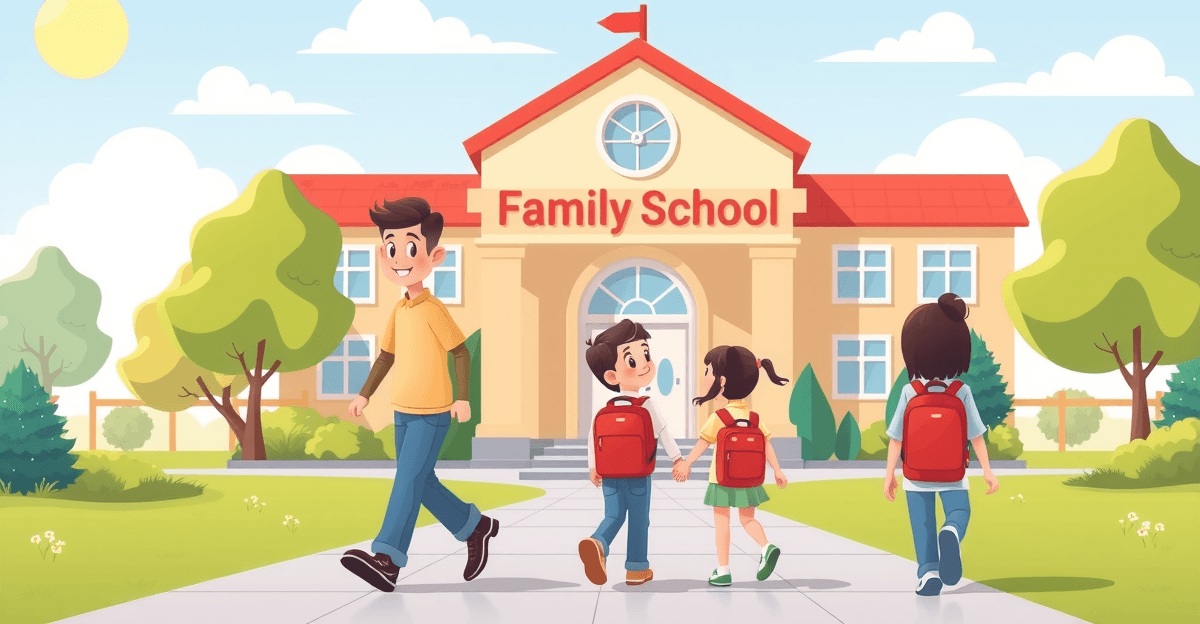
If your child is in K2 in 2026, Primary 1 registration is coming. The process can feel overwhelming — phases, priority groups, distance rules, balloting. But once you understand how it works, it is actually straightforward. This guide covers everything you need to know about registering your child for Primary 1 in 2027, including the phase system, timelines, eligibility, and how to prepare your child academically.
TL;DR: MOE P1 registration 2027: every phase explained, eligibility rules, distance priority, balloting process, and key dates. A clear guide for Singapore parents.
The registration itself takes place during the 2026 registration exercise (June–September 2026). For the exercise-year walkthrough — including documents, deadlines and week-by-week dates — see our P1 registration 2026 exercise guide.
Who Needs to Register?
P1 registration for 2027 is for children born between 2 January 2020 and 1 January 2021 (inclusive). These children will turn 7 in 2027.
All Singapore citizens (SC) and permanent residents (PR) must register through the MOE P1 registration exercise. International students follow a separate process (Phase 3).
The Phase System Explained
MOE's P1 registration runs in phases. Each phase has specific eligibility criteria, and earlier phases have priority. If a school fills up in an earlier phase, fewer places remain for later phases.
The P1 registration phases at a glance:
- Phase 1 — sibling currently in the school (guaranteed place)
- Phase 2A — parent/sibling alumni, school staff's children, MOE Kindergarten pupils of the school
- Phase 2B — parent volunteers (40 hours), community/church/clan connections
- Phase 2C — open registration for everyone else (balloting most common here)
- Phase 2C Supplementary — second chance for children not placed in 2C
- Phase 3 — international students
Here is how each phase works.
Phase 1 — For Children with Siblings in the School
Who is eligible: Children who have a sibling currently studying in the school.
When: Usually the last week of June 2026.
What to know:
- This is the most secure phase. Registration is guaranteed — there is no balloting.
- You must provide proof that your older child is currently enrolled in the school.
- This phase alone can fill a significant portion of a popular school's places.
Action required: Register online during the designated window. No need to visit the school in person.
Phase 2A — MOE Kindergarten and School Connections
Who is eligible:
- Children whose parent or sibling is a former student of the school (including the primary school for an affiliated secondary school)
- Children whose parent is a staff member of the school
- Children from an MOE Kindergarten (MK) that is within the primary school
When: Usually early July 2026.
What to know:
- If demand exceeds supply, Singapore citizens get priority over permanent residents. Within each citizenship group, children living within 1 km of the school get priority.
- Alumni connections are valuable here. If you or your spouse attended the primary school, your child qualifies for 2A.
- MK children have a smooth pathway to the attached primary school through this phase.
Phase 2B — Volunteer and Community Connections
Who is eligible:
- Children whose parent has volunteered at the school for at least 40 hours over the past year (before 1 July of the registration year)
- Children whose parent is a member of the school's advisory or management committee
- Children whose parent is endorsed by the church or clan directly connected to the school
- Children whose parent is a member of a community or religious organisation affiliated with the school
When: Usually mid to late July 2026.
What to know:
- This is the "volunteer parent" phase. If you are reading this early enough, you may still have time to start volunteering at your preferred school. Volunteering typically needs to begin by July 2025 for the 2027 registration exercise.
- At least 20 places are reserved for Phase 2B onwards at every school.
- Balloting may occur if the school is oversubscribed. Distance priority applies.
Phase 2C — Open Registration
Who is eligible: All Singapore citizens and permanent residents who have not been admitted in earlier phases.
When: Usually late July or early August 2026.
What to know:
- This is the main open-registration phase. No special connection to the school is needed.
- At least 20 places are reserved for Phase 2C at every school.
- This is where balloting is most common for popular schools.
- Priority order: Singapore citizens within 1 km > SC within 1-2 km > SC beyond 2 km > PR within 1 km > PR within 1-2 km > PR beyond 2 km.
- You can only register at one school. Choose wisely.
Phase 2C Supplementary — Second Chance
Who is eligible: Children who were not admitted in Phase 2C.
When: Usually late August or September 2026.
What to know:
- This phase is for children who were balloted out in Phase 2C or did not register earlier.
- The list of available schools is published on the MOE website before registration opens.
- Popular schools are typically full by this point. You will be choosing from schools with remaining vacancies.
Phase 3 — International Students
Who is eligible: Non-Singapore citizens and non-permanent residents.
When: Usually September 2026.
What to know:
- International students register only after all SC and PR registrations are complete.
- Places are extremely limited at popular schools.
- Parents of international students should have backup options ready.
- Many internationally-mobile families weigh the international school track instead — our international vs local preschool comparison walks through which pathway fits which family.
2027 Registration Timeline (Estimated)
MOE confirms exact dates each year, typically in May or June. Based on historical patterns, here is the expected timeline for the 2027 registration exercise:
| Phase | Estimated Dates | Registration Method |
|---|---|---|
| Phase 1 | Last week of June 2026 | Online |
| Phase 2A | First week of July 2026 | Online |
| Phase 2B | Third week of July 2026 | Online |
| Phase 2C | Last week of July 2026 | Online |
| Phase 2C Supplementary | Late August 2026 | Online |
| Phase 3 | September 2026 | Varies |
Important: Bookmark the MOE P1 Registration page and check it from May 2026 for confirmed dates.
How to Choose the Right School
Factor 1: Distance from Home
Distance is not just a convenience factor — it directly affects your chances of admission in Phase 2C. Children living within 1 km of the school have priority over those living 1-2 km away, who have priority over those beyond 2 km.
Use the MOE School Finder to check which schools are within 1 km and 2 km of your home address.
Factor 2: School Culture and Programmes
Visit open houses (usually held in the first half of the year) and talk to current parents. Look beyond the school's reputation and consider:
- Teaching philosophy — does it match your parenting values?
- CCAs and programmes — what is available for your child's interests?
- Mother Tongue offerings — does the school offer your child's Mother Tongue language?
- Support programmes — what resources exist for children who need additional help?
Factor 3: Realistic Chances
Check the previous year's registration results on the MOE website. For each school, you can see how many places were available and taken at each phase, and whether balloting occurred.
If a school consistently ballots at Phase 2C, and you have no Phase 1 or 2A eligibility, your chances are lower. Have a backup school in mind.
Want the full playbook? Our paid P1 Registration 2027 Ballot Strategy Guide (PDF, S$12) goes deeper than this article: how to grade any school SAFE / EDGE / GAMBLE from MOE's published numbers, a 6-step ballot-avoidance decision framework, the honest math on volunteering and the 1km move, plus checklists for the whole exercise. Instant download.
Factor 4: Sibling Consideration
If you have younger children, the school you choose now affects future registrations. Your younger children will qualify for Phase 1, guaranteeing a place. Choose a school that works for all your children, not just the eldest.
Preparing Your Child Academically for Primary 1
P1 registration is about paperwork and eligibility. But preparing your child for the reality of Primary 1 is equally important. Here is what your K2 child should be working on. (These expectations flow directly from the MOE NEL framework that kindergartens follow.)
Literacy Readiness
By the end of K2, your child should be able to:
- Read simple sentences independently
- Recognise 50-100 sight words
- Use phonics to decode unfamiliar words
- Write all uppercase and lowercase letters legibly
- Write their own name
For a detailed breakdown, see our K1 vs K2 readiness checklist.
If your child is behind in phonics or sight words, daily practice with an adaptive tool like QuizKin can close gaps efficiently. The app identifies exactly which skills need work and provides targeted practice — far more effective than generic worksheets.
Numeracy Readiness
Your child should be able to:
- Count to at least 20
- Recognise written numerals 1-20
- Do simple addition and subtraction within 10
- Recognise basic shapes
- Understand simple patterns
Independence and Life Skills
Primary 1 is a significant independence jump. Your child will need to:
- Manage their own belongings — pack and unpack their school bag, keep track of their water bottle and lunch box
- Follow a schedule — move between classrooms, be ready for different subjects
- Eat independently — manage their recess time, buy food at the canteen (if applicable)
- Use the toilet independently — no teacher assistance in primary school
- Communicate needs — tell a teacher if they are unwell, lost, or need help
Start building these skills 6 months before P1, during the second half of K2. For a complete preparation checklist, read our guide on preparing your child for Primary 1.
Social and Emotional Readiness
Primary 1 classes have 30-40 children — double the typical kindergarten class. Your child needs to:
- Follow classroom rules without constant reminders
- Work independently on tasks for 15-20 minutes
- Cooperate with classmates on group activities
- Handle disagreements with words, not actions
- Cope with being away from parents for a full school day
Common P1 Registration Mistakes
Mistake 1: Not Checking Distance Early Enough
Many parents discover too late that they are 1.1 km from their preferred school — just outside the 1 km priority band. Check distances using the MOE School Finder well in advance. Distance is measured from your official residential address, not your workplace or grandparents' address.
Mistake 2: Not Starting Volunteering Early Enough
Phase 2B requires 40 hours of volunteering completed before 1 July of the registration year. If you want to register in Phase 2B for 2027, you need to have completed your 40 hours by 1 July 2026 — which means starting by mid-2025 at the latest. Schools fill their volunteer slots quickly.
Mistake 3: Putting All Hopes on One School
Have at least two schools in mind. If your Phase 2C registration is balloted out, you will need to register at another school in Phase 2C Supplementary. Knowing your backup options in advance reduces stress.
Mistake 4: Focusing Only on Registration, Not Readiness
Getting into the right school is important, but it means nothing if your child is not ready for the demands of Primary 1. Academic readiness, independence, and social-emotional skills all need attention during K2.
Mistake 5: Overlooking Mother Tongue Considerations
Not all schools offer all Mother Tongue languages. If your child studies a less common Mother Tongue language (Tamil, Malay), check that the school offers it before registering.
Key Dates to Remember (2026)
| Date | Action |
|---|---|
| January-May 2026 | Attend school open houses, research schools, check distances |
| May 2026 | MOE publishes confirmed P1 registration dates and vacancy information |
| June 2026 | Phase 1 registration |
| July 2026 | Phase 2A, 2B, 2C registration |
| August-September 2026 | Phase 2C Supplementary and Phase 3 |
| October-December 2026 | Focus on P1 readiness — academic skills, independence, routines |
| January 2027 | Primary 1 begins |
After Registration: P1 Orientation (November 2026)
Registration is not quite the finish line. Once your child has a confirmed place, the school will invite you to its P1 orientation, typically held in November 2026 for the 2027 intake — the school contacts registered families directly with the exact date.
Orientation day usually covers:
- A tour of the school with your child (classrooms, canteen, toilets, assembly area)
- Meeting the principal and, at some schools, the form teachers
- Buying uniforms, shoes, and the P1 booklist
- Administrative briefings — school fees (GIRO setup), student care options, school bus registration
- For your child: often a short classroom activity session to get a feel for "big school"
Treat it as a preparation milestone, not a formality — it is your best chance to note practical details (recess arrangements, drop-off logistics) and to let your child physically experience the school before Day 1. We cover what happens on the day, and how to debrief your child afterwards, in our P1 orientation guide.
Making the Most of K2
While the registration process is administrative, the months between registration and P1 entry (roughly July to December 2026) are critical preparation time. Use this period to:
- Close academic gaps. If your child is behind in reading or numeracy, daily practice with QuizKin and reading together can make a significant difference in 6 months.
- Build independence. Gradually increase your child's responsibility for their own belongings, routines, and self-care.
- Practise the P1 routine. Start waking up at the P1 start time, practising packing a school bag, and simulating the longer school day.
- Visit the school. If possible, walk or drive the route to school with your child so they are familiar with it before the first day.
- Read the school's parent handbook. Most schools send this out before the start of the year. Read it thoroughly so you know the rules, expectations, and administrative processes.
For a comprehensive preparation plan, see our detailed guide on how to prepare your child for Primary 1.
Going in with a strategy? If you want a single document that turns all of the above into decisions — which school to pick, which ballot to avoid, and what your fallback should be — get the P1 Registration 2027 Ballot Strategy Guide (PDF, S$12).
Frequently Asked Questions
When does P1 registration for 2027 open?
P1 registration for 2027 entry typically begins in June 2026. Phase 1 usually opens in the last week of June, with subsequent phases running through August and September. MOE announces the exact dates on their website in early 2026. Bookmark the MOE P1 registration page and check from May 2026 onwards for the confirmed schedule.
Can I register at more than one primary school?
No. You may only register at one school per phase. If your child is not admitted in an earlier phase, they automatically move to the next eligible phase. You cannot register at multiple schools simultaneously. Choose carefully, especially for Phase 2B and 2C where balloting is possible.
What happens if my child does not get into any school during registration?
If your child is not placed after all phases (including Phase 2C Supplementary), MOE will work with you to allocate a school with available vacancies. No child is left without a school place. However, the allocated school may not be your preferred choice, which is why it is important to plan your registration strategy carefully.
Does my child need to pass a test to enter Primary 1?
No. There is no entrance test for Primary 1 in Singapore mainstream schools. All Singapore citizens born in the eligible year have the right to a place in a government or government-aided primary school. Admission is based on the registration phase system (priority by affiliation, distance, etc.), not academic ability.
How important is the distance from home to school for P1 registration?
Very important for Phase 2B and 2C. When a school is oversubscribed, priority goes first to Singapore citizens, then permanent residents. Within each group, children living within 1 km of the school are given priority over those living within 1-2 km, who in turn have priority over those living beyond 2 km. If demand still exceeds supply within the same distance band, a ballot is conducted.
What are the phases in P1 registration?
In order: Phase 1 (sibling in the school — guaranteed), Phase 2A (alumni, staff children, MOE Kindergarten pupils), Phase 2B (volunteers and community connections), Phase 2C (open registration — balloting most common), Phase 2C Supplementary (second chance), and Phase 3 (international students). Earlier phases have priority; every school reserves places for Phases 2B and 2C.
When is P1 orientation for the 2027 intake?
Typically November 2026 — after all registration phases close. Your child's school will contact you directly with the date. See our P1 orientation guide for what to expect on the day.
Registration sorted? The next question is readiness — see what to work on in the K2 bridge year before Primary 1 and the P1 readiness skills checklist.
Sources
- MOE — Primary 1 Registration
- MOE — Primary School Education
- ECDA — Early Childhood Development Agency
Looking for more? Check out find a tutor for free on TuitionLah.
Exploring parenthood in Singapore? Visit ParentLah for practical tips on raising kids in Singapore.
Practise what you’ve read with QuizKin
Adaptive quizzes covering phonics, sight words, numbers, and more — aligned with the Singapore MOE curriculum. Start your free Premium trial today.
Frequently Asked Questions
P1 registration for 2027 entry typically begins in June 2026. Phase 1 usually opens in the last week of June, with subsequent phases running through August and September. MOE announces the exact dates on their website in early 2026. Bookmark the MOE P1 registration page and check from May 2026 onwards for the confirmed schedule.
No. You may only register at one school per phase. If your child is not admitted in an earlier phase, they automatically move to the next eligible phase. You cannot register at multiple schools simultaneously. Choose carefully, especially for Phase 2B and 2C where balloting is possible.
If your child is not placed after all phases (including Phase 2C Supplementary), MOE will work with you to allocate a school with available vacancies. No child is left without a school place. However, the allocated school may not be your preferred choice, which is why it is important to plan your registration strategy carefully.
No. There is no entrance test for Primary 1 in Singapore mainstream schools. All Singapore citizens born in the eligible year have the right to a place in a government or government-aided primary school. Admission is based on the registration phase system (priority by affiliation, distance, etc.), not academic ability.
Very important for Phase 2B and 2C. When a school is oversubscribed, priority goes first to Singapore citizens, then permanent residents. Within each group, children living within 1 km of the school are given priority over those living within 1-2 km, who in turn have priority over those living beyond 2 km. If demand still exceeds supply within the same distance band, a ballot is conducted.
P1 registration runs in this order: Phase 1 (children with a sibling currently in the school — guaranteed), Phase 2A (parent/sibling alumni, staff children, and MOE Kindergarten pupils of the school), Phase 2B (parent volunteers, community and church/clan connections), Phase 2C (open registration for all remaining citizens and PRs — where balloting is most common), Phase 2C Supplementary (second chance for those not placed in 2C), and Phase 3 (international students). Earlier phases have priority, and every school reserves places for Phases 2B and 2C.
Primary schools typically hold their P1 orientation in November of the year before entry — so for the 2027 intake, expect orientation around November 2026, after all registration phases have closed. The school your child is registered at will contact you directly with the date and programme. Orientation usually covers a school tour, meeting the form teachers, buying uniforms and books, and administrative briefings.
Ready to make learning fun?
QuizKin turns screen time into learning time with adaptive quizzes built for K1-K2 kids in Singapore. Free to start.
Related Articles
Primary 1 Registration 2026: Phases & Key Dates
Every P1 registration phase for 2026 explained — eligibility, key dates, documents, balloting odds and how to choose a school. A complete parent checklist.
Before Primary 1: What Learning Tools Actually Work in the K2 Bridge Year (2026)
KooBits, Practicle and Geniebook all start at P1 — so what should your K2 child use in the year before Primary 1? An honest guide to the K2-to-P1 bridge year for Singapore parents.

Free K2 Assessment Test: Is Your Child Ready for Primary 1? (Singapore 2026)
Take a free P1 readiness assessment for your K2 child. Covers sight words, phonics, number bonds, and Chinese — the skills Singapore Primary 1 expects from Day 1.